
Healthy trees add beauty, shade, and value to your property, but Florida's warm temperatures, frequent rainfall, and high humidity also create ideal conditions for many tree diseases.
Homeowners throughout Lakewood Ranch, Sarasota County, Bradenton, and nearby communities often notice symptoms such as yellowing leaves, dying branches, mushrooms growing near tree roots, or unusual bark damage without realizing these may indicate serious health problems.
Early detection is one of the best ways to improve the chances of saving an affected tree and preventing disease from spreading to nearby trees.
In this guide, we'll explore some of the most common tree diseases found in Southwest Florida, the warning signs to watch for, and when it's time to schedule a professional tree inspection.
Why Florida Trees Are More Susceptible to Disease
Florida's subtropical climate allows trees to grow throughout much of the year.
While this creates beautiful landscapes, it also encourages fungi, bacteria, insects, and other organisms that can damage trees.
Additional factors include:
- High humidity
- Frequent rainfall
- Hurricane and storm damage
- Poor drainage
- Soil compaction
- Drought stress
- Improper pruning
Trees under stress are generally more vulnerable to disease than healthy, properly maintained trees.
Common Warning Signs of Tree Disease
Tree diseases often develop slowly, making early symptoms easy to overlook.
Watch for:
- Yellow or brown leaves
- Leaves dropping early
- Dead branches
- Cracked bark
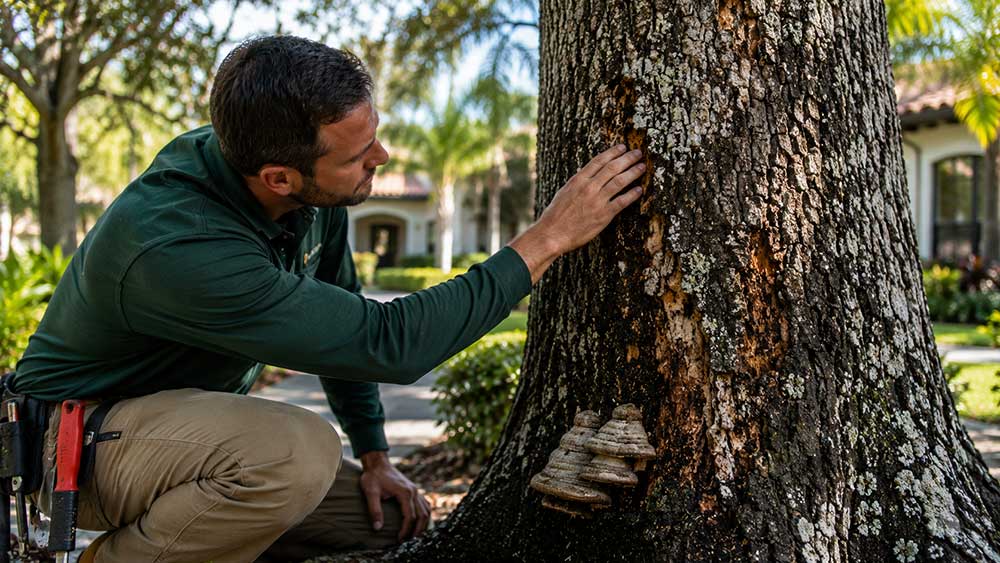
- Mushrooms growing near the base
- Hollow trunks
- Soft or rotting wood
- Sparse canopy growth
- Sudden leaning
- Insect infestations
If you notice several of these symptoms, a professional evaluation is recommended.
1. Ganoderma Root Rot
Ganoderma Root Rot is one of the most serious diseases affecting many mature Florida trees.
This fungal disease attacks the root system and lower trunk, weakening the tree from the inside.
Common symptoms include:
- Mushrooms or shelf-like fungi near the trunk
- Declining canopy
- Dead branches
- Soft or decaying wood
- Reduced stability
Unfortunately, advanced Ganoderma Root Rot cannot usually be cured.
Early detection helps reduce safety risks before structural failure occurs.
2. Laurel Wilt Disease
Laurel Wilt affects several members of the laurel family and has caused significant tree loss throughout Florida.
Symptoms include:
- Sudden leaf discoloration
- Wilting foliage
- Branch dieback
- Dark streaking beneath the bark
Because this disease spreads quickly, prompt identification is important.
3. Oak Decline
Oak trees are among the most valuable landscape trees in Lakewood Ranch.
However, environmental stress, poor growing conditions, and disease can gradually weaken mature oaks.
Signs include:
- Thinning canopy
- Dead upper branches
- Slow growth
- Leaf discoloration
- Premature leaf drop
Professional care can often improve overall tree health when problems are identified early.
4. Palm Tree Diseases
Palm trees can also develop diseases that affect their appearance and long-term health.
Common issues include:
- Bud rot
- Fusarium wilt
- Nutrient deficiencies
- Ganoderma disease in palms
Symptoms may include:
- Brown fronds
- Wilting
- Crown decline
- Soft trunk tissue
- Uneven growth
Routine inspections and proper maintenance help reduce these risks.
5. Powdery Mildew and Leaf Spot Diseases
While often less severe than root diseases, fungal leaf diseases can affect many ornamental trees.
Symptoms include:
- White powdery coating
- Brown leaf spots
- Distorted leaves
- Premature leaf drop
Good airflow and proper pruning often help reduce fungal problems.
What Causes Tree Diseases?
Several factors increase disease risk, including:
- Storm damage
- Improper pruning
- Mechanical injuries
- Overwatering
- Poor drainage
- Soil compaction
- Insect activity
- Nutrient deficiencies
Maintaining healthy growing conditions helps improve a tree's natural ability to resist disease.
Can Diseased Trees Be Saved?
Not every diseased tree requires removal.
Depending on the problem, treatment options may include:
- Professional pruning
- Fertilization
- Improved irrigation
- Disease monitoring
- Hazard reduction
- Soil improvement
However, trees with advanced decay or severe structural instability may require removal for safety reasons.
A professional arborist can determine the best course of action.
Why Professional Tree Inspections Matter
Many diseases begin inside the tree long before visible symptoms appear.
Professional inspections help identify:
- Early disease
- Structural weaknesses
- Root problems
- Storm damage
- Insect infestations
- Safety hazards
Early intervention often improves long-term outcomes.
Protect Your Trees with Preventive Care
Routine maintenance is one of the best ways to reduce disease problems.
Professional tree care may include:
- Regular inspections
- Proper pruning
- Deadwood removal
- Palm maintenance
- Tree health monitoring
- Storm preparation
Healthy trees are generally better able to resist disease and recover from environmental stress.
Professional Tree Care in Lakewood Ranch
Lakewood Ranch Tree Care proudly serves homeowners and businesses throughout:
- Lakewood Ranch
- Sarasota
- Bradenton
- Myakka City
- Sarasota County
- Manatee County
Our experienced team provides:
- Tree inspections
- Tree trimming
- Tree removal
- Palm tree maintenance
- Stump grinding
- Emergency tree services
We help homeowners protect the health, safety, and beauty of their landscapes year-round.
Schedule a Tree Health Inspection Today
If you've noticed unusual changes in your trees, don't ignore the warning signs.
Early diagnosis can often prevent larger problems and improve the long-term health of your landscape.
Contact Lakewood Ranch Tree Care today to schedule a professional tree inspection or request a free estimate for expert tree care services.