
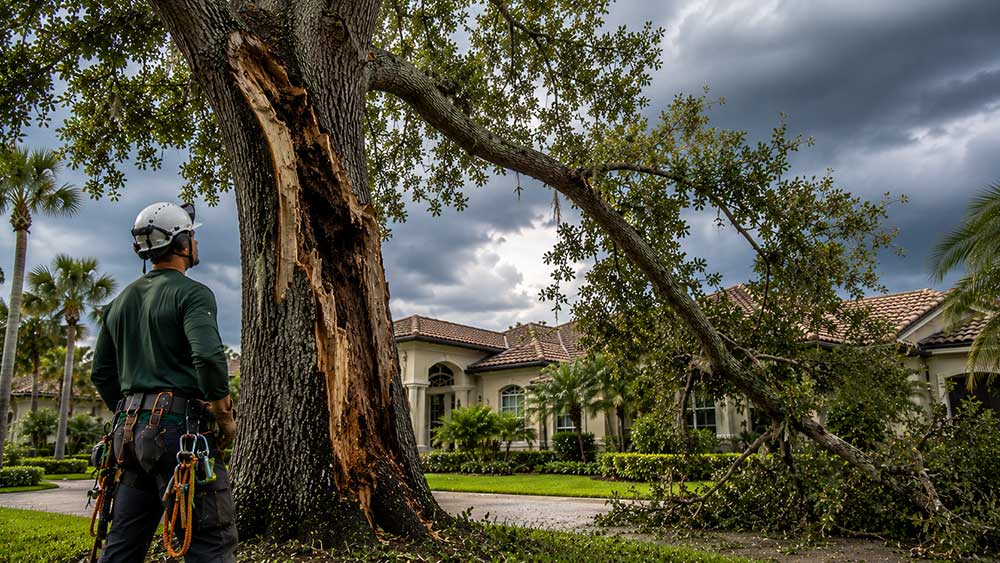
Trees add beauty, shade, and value to your property, but not every tree can be saved with pruning or routine maintenance. In some situations, tree removal is the safest and most responsible option for protecting your home, family, and surrounding landscape.
Many homeowners struggle to determine whether a tree simply needs trimming or if it has become too damaged, diseased, or unstable to remain standing safely.
Understanding the warning signs can help prevent costly property damage and reduce the risk of injuries caused by falling trees or branches.
Here are seven common signs that a tree may need to be removed instead of trimmed.
1. The Tree Is Dead or Dying
One of the clearest indicators that removal may be necessary is when a tree is dead or in severe decline.
Signs of a dying tree often include:
- Large sections without leaves
- Dead branches throughout the canopy
- Peeling or missing bark
- Fungal growth near the trunk
- Brittle branches that break easily
A dead tree quickly becomes unstable and can fall without warning, especially during Florida storms and high winds.
Professional evaluation can determine whether the tree can recover or if removal is the safest solution.
2. The Trunk Has Large Cracks or Structural Damage
The trunk serves as the foundation of the entire tree.
Major cracks, splits, or hollow areas can weaken structural integrity and significantly increase the likelihood of failure.
Warning signs include:
- Deep vertical cracks
- Multiple trunk splits
- Hollow cavities
- Large wounds that do not heal
- Significant bark separation
While minor damage may be manageable, severe trunk defects often require removal for safety reasons.
3. The Tree Has Started Leaning Suddenly
Not all leaning trees are dangerous, but a sudden change in position is often a serious warning sign.
A tree that recently began leaning may indicate:
- Root failure
- Soil instability
- Storm damage
- Internal decay
Watch for:
- Exposed roots
- Soil lifting around the base
- Cracks in the ground
- Increasing lean angle
Trees that lean toward homes, garages, driveways, or power lines should be inspected immediately.
4. The Tree Has Suffered Severe Storm Damage
Florida storms can place enormous stress on trees.
While some damaged trees can be restored through professional pruning, others become too compromised to remain safe.
Removal may be necessary when:
- Large portions of the canopy are lost
- Major limbs have split from the trunk
- Structural stability is compromised
- The tree has partially uprooted
Following hurricanes and severe thunderstorms, professional inspections can identify hidden damage that homeowners may overlook.
5. Root Damage Is Threatening Stability
Healthy roots are essential for supporting a tree.
Unfortunately, root damage is often difficult to detect because most of the root system remains underground.
Potential warning signs include:
- Leaning trees
- Exposed roots
- Poor growth
- Dead branches
- Soil movement around the trunk
Construction projects, drainage issues, and severe weather can all damage root systems.
When a significant portion of the root structure has failed, tree removal is often recommended.
6. Disease or Decay Has Spread Throughout the Tree
Some diseases can be treated successfully when detected early.
However, advanced decay often affects the tree's ability to support its own weight safely.
Signs of severe decay include:
- Mushrooms growing near roots
- Hollow sections
- Extensive deadwood
- Soft or rotting wood
- Large cavities
If decay affects major structural areas, removal may be necessary to prevent failure.
7. The Tree Poses a Risk to Structures or Power Lines
Even healthy trees may require removal if they create significant safety hazards.
This is especially true when trees:
- Grow too close to homes
- Interfere with power lines
- Threaten driveways or walkways
- Overhang roofs excessively
In some situations, strategic pruning can solve the problem.
In others, removal may provide the safest long-term solution.
Can a Tree Be Saved Instead of Removed?
Not every damaged tree needs to come down.
Professional arborists often use pruning, cabling, bracing, and other techniques to preserve healthy trees whenever possible.
A thorough inspection can determine whether:
- Trimming is sufficient
- Corrective pruning can improve safety
- Disease treatment is possible
- Removal is the best option
Every tree should be evaluated individually.
Why Professional Evaluation Matters
Tree removal decisions should never be based solely on appearance.
Some trees that look healthy may have hidden internal decay, while others that appear damaged may still be structurally sound.
Professional arborists can assess:
- Structural stability
- Root health
- Disease presence
- Storm damage
- Long-term safety risks
This helps homeowners make informed decisions while avoiding unnecessary removals.
Tree Removal Services in Lakewood Ranch
Lakewood Ranch Tree Care provides professional tree removal services throughout:
- Lakewood Ranch
- Sarasota
- Bradenton
- Myakka City
- Sarasota County
- Manatee County
Our experienced team safely handles:
- Hazardous tree removals
- Storm-damaged trees
- Large tree removals
- Emergency tree services
- Stump grinding
Every project is completed using professional equipment and safety-focused procedures.
Schedule a Tree Evaluation Today
If you are unsure whether a tree should be trimmed or removed, a professional inspection can provide clarity and peace of mind.
Lakewood Ranch Tree Care offers expert evaluations, tree trimming, tree removal, stump grinding, and emergency tree services throughout the area.
Contact our team today to request a free estimate and keep your property safe and beautiful year-round.