
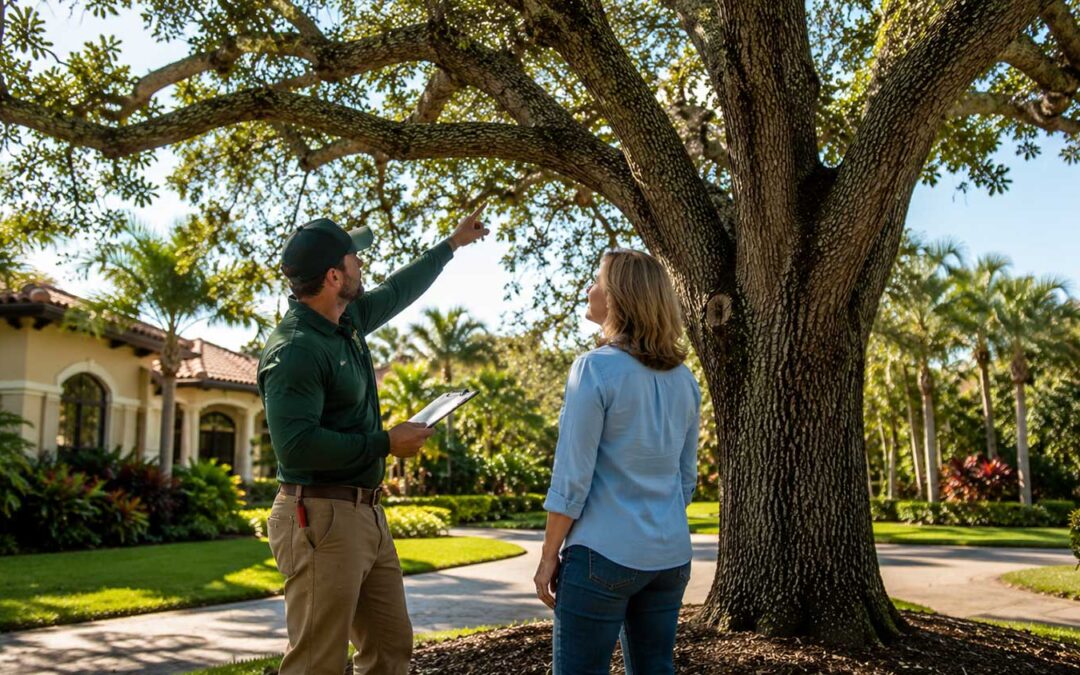
Many homeowners assume that if a tree is located on their property, they can remove it whenever they choose. While property owners often have significant rights regarding trees on their land, tree removal regulations can vary depending on local rules, protected tree classifications, environmental considerations, HOA requirements, and property-specific circumstances.
If you're considering tree removal in Sarasota County or the Lakewood Ranch area, it's important to understand that permit requirements may apply in certain situations.
Before removing a tree, homeowners should take time to verify current regulations and consult qualified professionals when necessary.
In this guide, we'll discuss common factors that may affect whether a permit is required and how professional arborists can help homeowners navigate the process.
Why Tree Removal Regulations Exist
Tree regulations are often designed to balance private property rights with environmental preservation, public safety, and community planning goals.
Large mature trees provide important benefits, including:
- Shade and cooling
- Stormwater management
- Wildlife habitat
- Improved air quality
- Increased property value
- Neighborhood aesthetics
Because of these benefits, some trees may receive additional protection under local regulations.
Are Tree Removal Permits Always Required?
Not necessarily.
Permit requirements can vary depending on factors such as:
- Tree species
- Tree size
- Tree condition
- Property location
- Protected tree status
- Environmental restrictions
- Local ordinances
- HOA requirements
For this reason, homeowners should avoid assuming that every tree can be removed without review.
Situations That May Affect Permit Requirements
Several factors may influence whether additional approvals are needed before tree removal.
Protected Tree Species
Certain tree species may receive special consideration under local regulations.
Examples can include:
- Large native trees
- Historic trees
- Protected canopy trees
- Environmentally significant trees
Requirements vary by jurisdiction and property type.
Tree Size and Trunk Diameter
Many municipalities use trunk diameter measurements when determining whether regulations apply.
Larger mature trees are often subject to different standards than smaller ornamental trees.
Professional arborists can help accurately measure and evaluate trees before removal.
Waterfront and Environmentally Sensitive Properties
Properties located near wetlands, conservation areas, lakes, or protected habitats may have additional requirements.
Environmental regulations can affect tree removal activities in these locations.
Homeowners should always verify local requirements before proceeding.
Homeowners Association Rules
Even when local government permits are not required, HOA guidelines may still apply.
Many communities throughout Lakewood Ranch have landscaping standards designed to maintain neighborhood appearance and consistency.
Before removing a tree, homeowners should review applicable HOA documents and requirements.
What About Dead, Diseased, or Hazardous Trees?
Trees that present safety concerns are often treated differently than healthy trees.
Examples may include:
- Dead trees
- Severely diseased trees
- Structurally compromised trees
- Storm-damaged trees
- Trees creating immediate hazards
Documentation from a qualified arborist may be helpful when evaluating hazardous tree situations.
Professional inspections can provide valuable information regarding tree health and safety risks.
Why Arborist Evaluations Are Important
Determining whether a tree should be removed often requires more than a visual inspection.
Professional arborists can evaluate:
- Structural stability
- Disease presence
- Root health
- Storm damage
- Safety concerns
- Long-term viability
These assessments help homeowners make informed decisions regarding tree care and removal options.
Common Reasons Homeowners Consider Tree Removal
Property owners throughout Sarasota County frequently request tree removal for reasons such as:
- Storm damage
- Dead or dying trees
- Root-related property issues
- Construction projects
- Safety concerns
- Severe disease
- Excessive leaning
- Power line interference
Every situation is unique and should be evaluated individually.
Can a Tree Be Saved Instead of Removed?
In many cases, yes.
Professional tree care services may be able to address issues through:
- Tree trimming
- Structural pruning
- Hazard reduction
- Disease management
- Crown restoration
Removing a tree is not always the only option.
A professional evaluation can determine whether corrective measures are available before removal becomes necessary.
What Happens During a Professional Tree Assessment?
A tree inspection typically includes:
- Visual health evaluation
- Structural assessment
- Root zone inspection
- Canopy condition review
- Safety risk analysis
The findings help determine the most appropriate course of action for the property owner.
Tree Removal Services in Lakewood Ranch and Sarasota County
Lakewood Ranch Tree Care provides professional tree services throughout:
- Lakewood Ranch
- Sarasota
- Bradenton
- Myakka City
- Sarasota County
- Manatee County
Our experienced team assists homeowners with:
- Tree inspections
- Tree trimming
- Hazard assessments
- Storm damage evaluations
- Tree removal services
- Stump grinding
We understand the unique challenges Florida homeowners face and work to provide safe, professional tree care solutions.
Schedule a Professional Tree Evaluation
If you're considering tree removal and have questions about the condition of a tree on your property, professional guidance can help you make informed decisions.
Lakewood Ranch Tree Care offers expert tree evaluations, tree trimming, tree removal, stump grinding, and emergency tree services throughout the area.
Contact our team today to request a free estimate and professional assessment.